
Parenting & Education
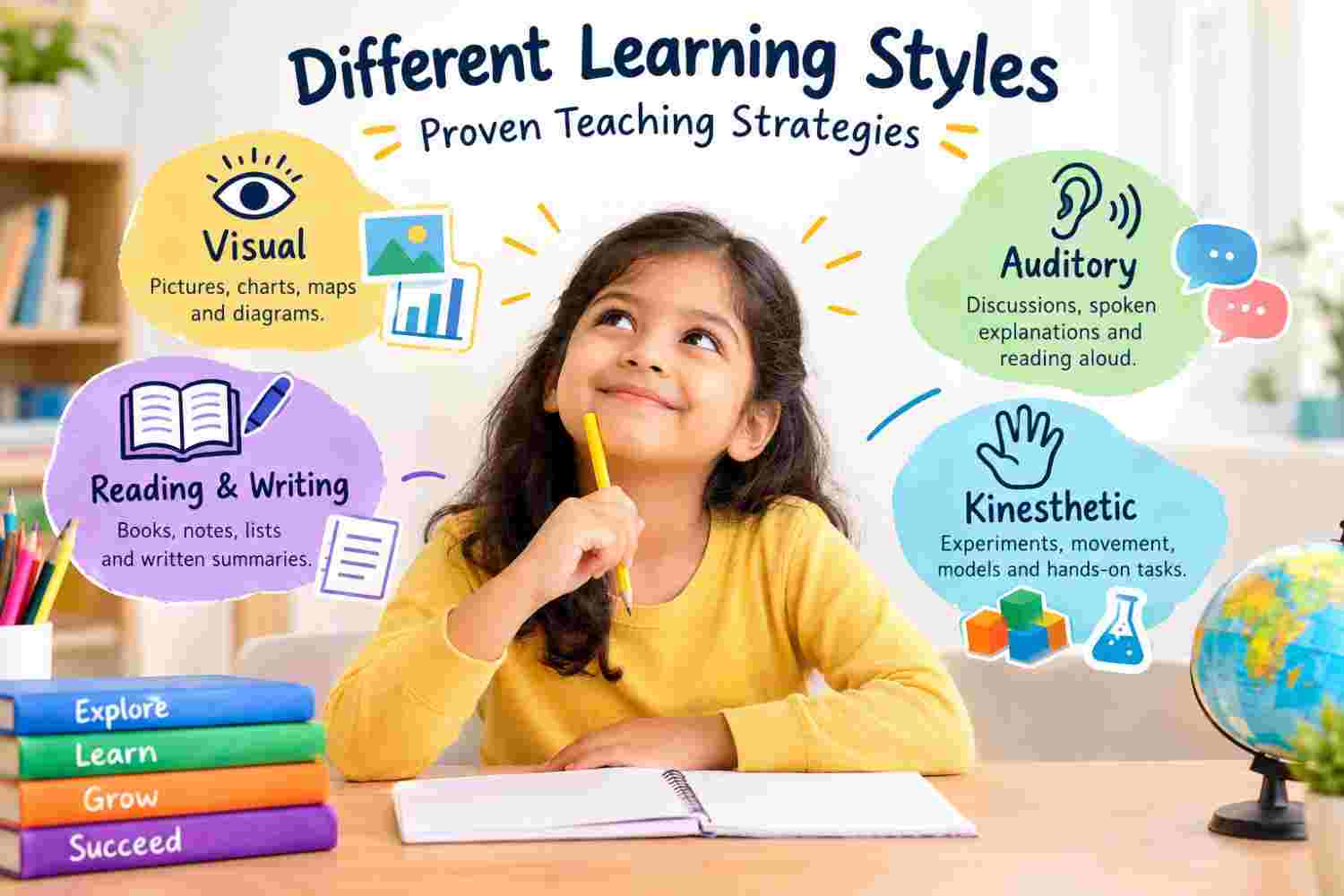
Different Learning Styles: Proven Teaching Strategies
Children understand and remember things in different ways. That's why different learning styles in children matter to parents. These are preferences. They are not fixed labels. Your child may like pictures today and discussion tomorrow.
Watch what helps your child understand. Notice what keeps them focused. See what helps them explain ideas. These clues show strengths. They also show challenges. Parents can use these clues. So can teachers. Then they can pick activities that work. Let's look at how this works.
What Are the Different Learning Styles in Children?
Some kids pick up things just by watching and doing. Others learn by hearing or writing. You can use these learning preferences to explain a topic. But children learn through a mix of methods. Don't limit your child to one style.
Learning styles are the ways children like to learn. Research shows a problem with this idea. A single teaching method isn’t right for every child. Try different ways to help them learn. The Education Endowment Foundation's guide explains the research behind this idea.
What Are the Four Common Learning Preferences?
01
Visual
Pictures, charts, maps, and diagrams.
02
Auditory
Discussions, spoken explanations, and reading aloud.
03
Reading and writing
Books, notes, lists, and written summaries.
04
Kinesthetic
Experiments, movement, models, and hands-on tasks.
Your child may switch approaches by subject. A map may help in geography. Making models helps kids learn science. Want to know how kids learn? Just watch them. Every child learns in their own way.
How Can Parents Identify Their Child's Learning Preferences?
Watch how your child learns. Notice how they respond to tasks. Try different teaching methods. Try pictures, talks, notes, and activities. See what works best. Discuss it with their teacher before changing their routine
For example, Meera's son Arjun struggled with fractions. She drew a pizza on paper. He smiled and understood half. The next day, they cut a real roti. Meera learned that pictures helped him understand fractions. She did not label him a “visual child.”
What Signs Should Parents Look For?
- Notice how your child starts homework.
- Try different ways to teach a topic.
- Notice where they need help.
- Ask teachers what works in class.
- Track progress and adjust activities.
Use a diagram to teach the water cycle. Then ask your child to explain it aloud. This helps with identifying strengths without labels.
Which Teaching Strategies Can Help Children Learn Better?
Effective teaching strategies use clear explanations and practice. They also use talks and simple tasks. Parents and teachers can mix methods. Find what fits your child best. This makes hard topics easier. Kids can also try new ways to learn and practise.
How Can Parents and Teachers Adapt Their Approach?
- Show it. Start with a plant diagram. Then show your child a real leaf to make the lesson clearer.
- Talk about it. Ask your child to teach you today's lesson.
- Write it. Have them write three short notes in their own words.
- Try it. Use simple experiments, puzzles, or role-play. Act out a story scene in English class.
- Break it down. Split a long maths problem into small steps. Offer extra guidance when needed.
No method is best for every child. The goal is variety. Some children need extra help. Different teaching methods may help.
You might also like our tips on effective study techniques for students in Saudi Arabia. Good effective teaching strategies work best with good study habits. Together, they build a flexible toolkit.
How Can Parents Build Better Learning Habits at Home?
Routines make it easier for kids to learn. A quiet space and short breaks help too. Adult support helps, too. Choose tasks that meet your child’s needs. Keep distractions away. Check in with teachers. Share progress. Ask questions. Regular support matters more than labels.
What Simple Changes Can Families Try?
- Set a regular study time and a quiet place.
- Split homework into small tasks.
- Add short movement breaks.
- Praise effort and curiosity, not only marks.
- Share progress and concerns with teachers.
Here's a sample evening. Your child starts homework at 5 p.m. They use a clear table. After 20 minutes, they take a five-minute break.
Frequently Asked Questions
1. What are the different learning styles in children?
Kids learn in their own ways. Some like pictures. Others like listening. Some enjoy reading and writing. Others learn by doing. Most kids use a mix.
2. How can parents identify their child's learning preferences?
Try different activities. Watch how your child responds. That's a good clue. Then discuss your observations with teachers.
3. What are some visual and practical learning activities for kids?
Visuals aid visual learners. Tactile models engage active learners. Puzzles and sorting games work for many.
4. Is it possible for a child to have many learning preferences?
Yes. Preferences overlap and change. Offer varied ways to learn.
Key Takeaways and Call-to-Action
- Children learn in different ways.
- Learning preferences can change. They are not fixed labels.
- Varied activities help children practise.
- Parents can spot strengths by tracking progress and talking to teachers.
- Routines and support build confidence.
Small changes at home can help every child learn. Understanding different learning styles in children can guide personalised learning for students.